
Blog

8 08, 2017

Remington: The College Years

2020-01-17T15:49:40-06:00August 8th, 2017|1 Comment

It’s August, and for students in Texas, that means the beginning of another school year. For some students, this month marks the beginning of their college years and will perhaps set the direction of their future careers. For many co-eds, college will be a time to discover their path, as was the case for SRM artist, Frederic Remington. In the spring of 1878, Remington wrote to his Uncle Horace Sackrider, “I am going to try and get into Cornell College this coming June and if I succeed will be a Journalist. I mean to study for an artist anyhow, whether [...]

25 07, 2017

Lions and Tigers and Bears – Oh My!

2020-01-17T15:47:42-06:00July 25th, 2017|0 Comments

*Well, maybe more like antelope, bears, horses, and cattle. This year’s Summer Camp theme was Animals in the West! This summer we hosted two weeks of Summer Camps: one for children between the ages of 6-9 years old and the other for tweens – children between the ages of 10-12 years old. What fun we had exploring the animals found within our collection and learning about other native animals of the West! Each day campers began with a still life warm up to get their creative juices flowing. Campers then spent time with our collection participating in gallery activities and [...]

20 06, 2017

Waffles in the Garden

2020-01-17T15:45:21-06:00June 20th, 2017|6 Comments

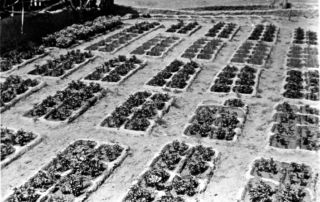
Happy Summer Solstice! Summer is a time for fun and adventure…in the garden! Vegetable gardens are in full bloom this season. In Texas, gardeners have to remain diligent about watering and protecting their precious plants from the brutal heat. In the Southwest, where it’s dry and arid, people have developed techniques in order to adapt their gardens to the environment. One such technique is practiced by the Zuni (A:shiwi) called Latdekwi:we, or waffle gardening. Timothy O'Sullivan. Gardens surrounding the Indian pueblo of Zuni, 1873. Stereograph. Source: Stereographs from geographical explorations and surveys west of the 100th meridian, expeditions of [...]

24 05, 2017

Gateway to the West

2020-01-17T15:44:08-06:00May 24th, 2017|0 Comments

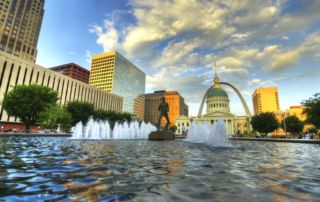
Named after Louis IX of France, St. Louis is a city filled with history. Now home to Anheuser-Busch and the Gateway Arch, St. Louis was once home to some of our SRM artists: Charles Russell, Oscar Berninghaus & Herbert Herget. Downtown St. Louis. Image courtesy Timothy K Hamilton. Born in St. Louis in 1864, Charles Marion Russell grew up in Oak Hill at his family's manor-style house near present-day Tower Grove Park, a site of picnics and Sunday gatherings for the best families of St. Louis. For Russell, it was a great area in which to ride his [...]

28 04, 2017

Orange You Glad It’s Western Art

2020-01-17T15:42:43-06:00April 28th, 2017|0 Comments

Last week we took a group of our docent volunteers on a journey down to Orange, Texas. About a 6 hour drive from Fort Worth, Orange is a town nestled into southeast Texas, not far from the Louisiana border. Although Orange is small, it packs a lot of punch when it comes to its cultural attractions. Sid Richardson Museum staff & docents at the Stark Museum of Art. The impetus for our trip was to visit the Stark Museum of Art, which houses one of the finest collections of art of the American West and Southwest. In addition [...]

6 04, 2017

What Makes Thunder?

2020-01-17T15:41:05-06:00April 6th, 2017|2 Comments

Remington depicts “thunder fighters” of the Sioux Nation not only braving a storm, but braving their own fears to chase off the big black thunder bird whose beating wings filled the air with roaring. The painting was originally intended as an illustration in the 1892 edition of Francis Parkman’s The Oregon Trail. Frederic Remington | The Thunder-Fighters Would take Their Bows and Arrows, Their Guns, Their Magic Drum | 1892 | Oil on wood panel | 30 inches x 18 inches Francis Parkman (1823-1893) was born into a well-to-do Boston family. In April of 1846, just out of [...]

8 03, 2017

Nancy Russell: Wife & Business Manager

2020-01-17T15:40:00-06:00March 8th, 2017|9 Comments

Today, Charles M. Russell is a household name among patrons of art of the American West. Who do art historians consistently credit for being the reason we have the beautiful Russell artworks that not only grace our galleries at the Sid Richardson Museum, but many public and private collections around the world? The artist’s wife, Nancy Cooper Russell. Born in 1874 in Kentucky, Nancy Cooper moved with her family to Montana in 1890. Four years later, at the age of 16, Nancy was left to fend for herself and eventually found work as a live-in housekeeper for a couple in [...]

15 02, 2017

Millie in Montana

2020-10-23T10:04:03-05:00February 15th, 2017|6 Comments

In 1907, Charlie Russell painted Utica, also known as A Quiet Day in Utica, a scene that is anything other than quiet. This work was a commission by the Lehman family, who had owned the general store in Utica, Montana. By this point, the family had moved to Lewistown and were wanting their former customer, the now-famous cowboy artist, to paint a picture to be used on a calendar to advertise their family store in Lewistown. Every figure in this painting is said to be identifiable, but today I want to focus on just one. In the doorway of the [...]

2 02, 2017

Keep Calm and Trail Drive On

2020-01-17T15:28:26-06:00February 2nd, 2017|2 Comments

*After the Civil War, there was a need to connect the ranchmen of Texas Longhorn cattle with the feeders and packers in northern U.S. By the 1870’s, Texas began to assume its preeminence as a source of American food, particularly beef. As such, moving cattle from grazing lands in Texas to rail terminals was an annual job. The new Kansas Pacific railroad brought an opportunity to set up new markets for Texas cattle in northern states. Promotional maps and pamphlets were printed in large numbers between 1871 and 1875 praising the benefits of using the railroad’s services to fill the [...]

5 01, 2017

Hide & Horn

2020-01-17T15:26:43-06:00January 5th, 2017|0 Comments

This year marks the 150th anniversary of the legendary Chisholm Trail. Named after the Scot-Cherokee trader, Jesse Chisholm, the trail was a major route for Texas livestock. In its brief existence, the cattle drive era amounted to the greatest migration of livestock in world history, with more than 5 million cattle and 5 million mustangs moving from Texas ranches to northern markets. As waypoint along the trail, Fort Worth experienced economic growth and developed a unique Western heritage as a result. The Best and Shortest Cattle Trail from Texas, Kansas Pacific Railway Company, St. Louis, MO: Levison & Blythe, [...]