


In museums, we often talk about looking closely. But what happens in our bodies and brains when we actually do it?
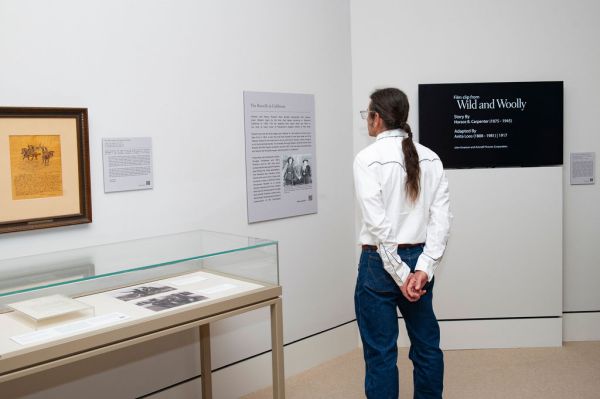 Recent research is beginning to put language—and data—around something many museum visitors intuitively know: spending time with art can change how we feel. A study highlighted in The Washington Post explored the physiological effects of slow looking, asking participants to spend just 20 minutes with works of art. The results were striking. Levels of cortisol, the body’s primary stress hormone, dropped by an average of 22 percent. Markers of inflammation fell even more sharply. Heart rhythms suggested deeper relaxation.
In other words, simply standing in front of art and paying attention mattered.
Psychologist Dacher Keltner, a leading researcher on awe, helps explain why. Slow, deliberate looking activates the amygdala, the part of the brain that processes emotion, along with the periaqueductal gray, a region that helps regulate autonomic functions like breathing and heart rate. Awe, in this sense, is not just a fleeting feeling of wonder. It’s a full-body experience that shifts us out of fight-or-flight and into a state of presence and connection.
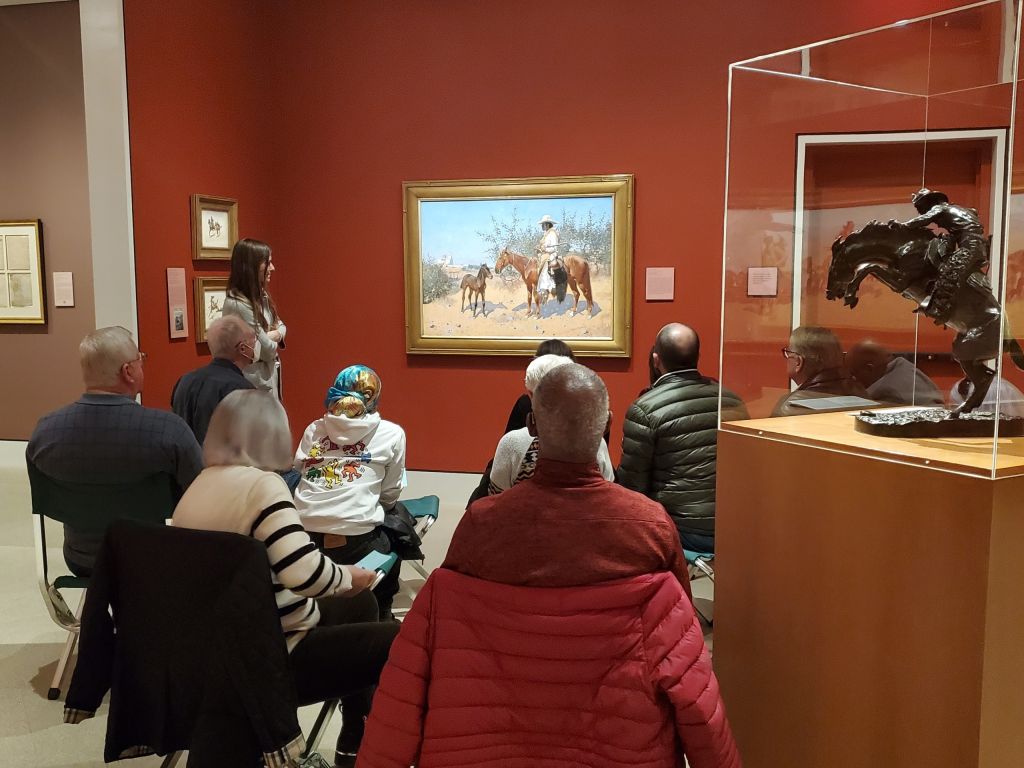
This science resonates deeply with what we practice each month at the Sid Richardson Museum through Tea & Talk, our slow looking program held on the first Wednesday of every month at noon. During the program, we spend 30 uninterrupted minutes with a single work of art from the collection. Together, we look carefully, notice details, ask questions, and build meaning through conversation. There’s no lecture and no expectation of prior knowledge. Just time, attention, and curiosity.
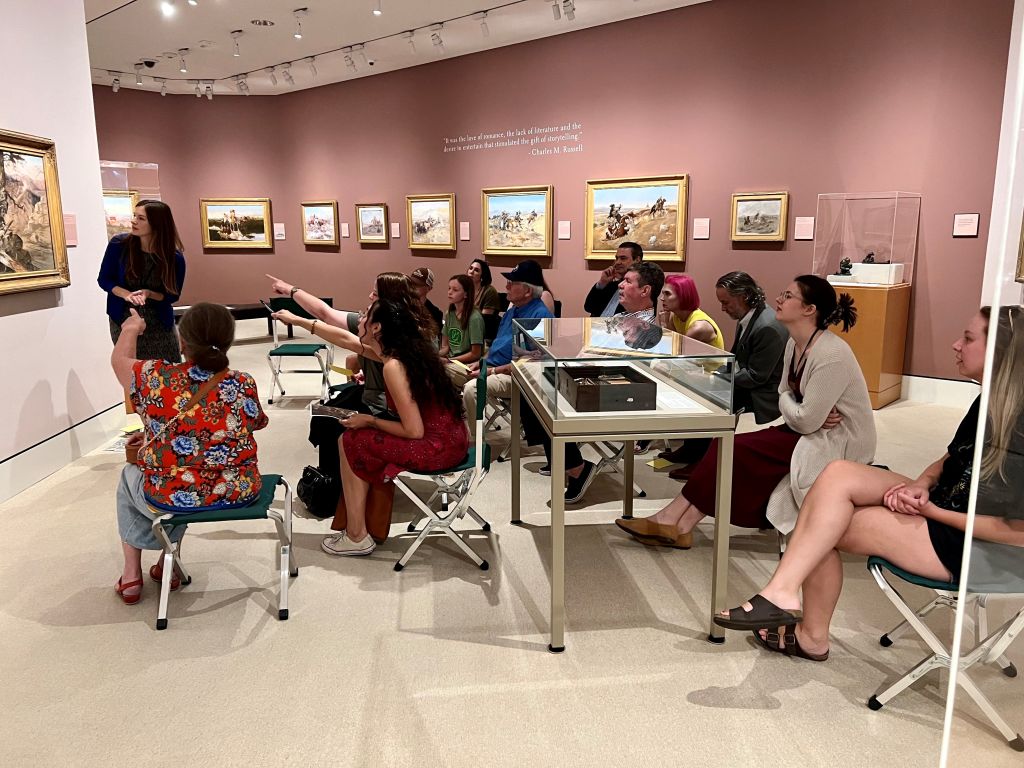
What’s remarkable is how much emerges when we give ourselves permission to linger. A gesture in a painted hand. A subtle shift of light across a landscape. A narrative detail that went unnoticed during quicker visits. Just as important, we begin to notice changes within ourselves: breathing slows, shoulders soften, and conversations deepen.
After our time in the galleries, many participants choose to continue the experience over tea and tea sandwiches in the classroom. This social component is not incidental. Research on awe consistently shows that it fosters connection, reducing feelings of isolation and increasing a sense of belonging. Talking with others about what we’ve seen extends the benefits beyond the artwork itself.
Even as the facilitator of Tea & Talk, I feel resistance before each program. There is always the quiet pressure of a busy day, the sense that 30 minutes is a luxury rather than a necessity. And yet, every single time, I leave the program having noticed something new in a painting I’ve worked with for more than 12 years. More than that, I walk away feeling calmer and more connected—to myself, to the artwork, and to the people around me.
The science helps explain why this happens, but it doesn’t diminish the mystery of it. Awe, by definition, resists being fully contained. What research can tell us is that slowing down with art is not indulgent or passive. It is active, restorative, and deeply human.
At its best, a museum is not just a place to see objects, but a place to practice attention. Programs like Tea & Talk remind us that art does not ask us to rush. It invites us to pause. And in doing so, offers something our nervous systems are quietly craving.


Leave A Comment